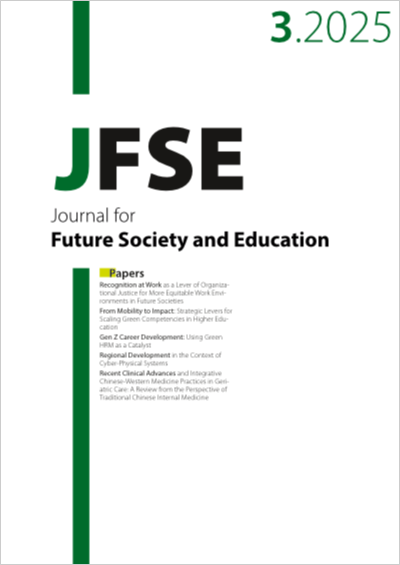
Recognition at Work as a Lever of Organizational Justice for More Equitable Work Environments in Future Societies
DOI:
https://doi.org/10.3991/jfse.v2i3.56063Keywords:
recognition, organizational justice, demographic factors, employment factors, workplace, correlationAbstract
Fair organizations play a key role in worker performance. This study looked at dimensions of organizational justice at work, as well as demographic and professional factors. A total of 122 healthcare professionals took part (59% women, 41% men), mostly aged between 35 and 55, with a predominance of non-managers (74.6%). Moderate levels of distributive, procedural, and interactional justice were observed. The results show significant positive correlations between all dimensions of recognition and those of justice, indicating that the higher the recognition, the stronger the perception of justice. These findings confirm the importance of recognition in reinforcing a sense of justice at work. Thus, organizations can foster a positive and productive work climate by valuing recognition and taking the number of subordinates into account when designing justice initiatives. Further research is needed to explore the mechanisms and mediating factors in the relationship between recognition, justice, and demographic or occupational variables.
Downloads
Published
How to Cite
Issue
Section
License
Copyright (c) 2025 Hanaa ELMASTINI

This work is licensed under a Creative Commons Attribution 4.0 International License.