
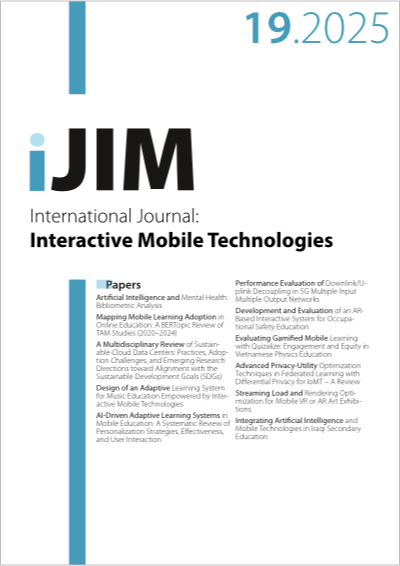
AI-Driven Adaptive Learning Systems in Mobile Education: A Systematic Review of Personalization Strategies, Effectiveness, and User Interaction
DOI:
https://doi.org/10.3991/ijim.v19i19.57695Keywords:
artificial intelligence, adaptive learning systems, mobile education, personalization strategies, systematic review, user interaction designAbstract
While artificial intelligence (AI) has transformed educational contexts through automated feedback generation, critical fragmentation exists in understanding its sustained impact on student learning trajectories, particularly regarding emotion recognition technologies in mobile STEM education. This systematic review investigates AI-driven adaptive learning systems in mobile education, examining personalization strategies, effectiveness measures, and user interaction patterns to establish foundations for emotion-aware educational technologies. A systematic literature review following PRISMA guidelines was conducted across major academic databases, yielding 39 eligible studies from 2015–2025. Bibliometric analysis using R Studio’s bibliometric package examined research patterns, collaboration networks, and thematic evolution. Network analysis of key term co-occurrences and cluster analysis identified conceptual relationships and structural hierarchies within the research domain. The field demonstrates exponential growth with a 32.75% annual increase in research output, particularly since 2022. Mobile learning emerged as the dominant conceptual hub (betweenness centrality: 197.446), with AI and personalized learning serving as critical connectors between research domains. Three primary themes were identified: personalization strategies establishing sophisticated frameworks for learner modeling and context-aware adaptation; effectiveness measures revealing consistent improvements in academic performance and engagement across STEM contexts; and user interaction patterns exposing both transformative potential and challenges concerning data privacy and usability considerations. This study provides the first comprehensive systematic mapping of AI-driven mobile learning through the lens of emotion recognition potential, revealing substantial gaps in longitudinal impact assessment and theoretical integration. Findings advance understanding of how the Adaptive Feedback Regulation Framework can be enhanced through emotion-aware technologies, offering practical insights for implementing sophisticated personalization strategies. Future research should prioritize longitudinal studies examining sustained impact, crosscultural acceptance patterns, and ethical implications of emotion recognition in educational contexts.
Downloads
Published
How to Cite
Issue
Section
License
Copyright (c) 2025 Samer Yaghmour, Muhammad Imran Qureshi, Ihtisham Ullah, Ravindra Kumar Perumal, Muhammad Muddassar Khan

This work is licensed under a Creative Commons Attribution 4.0 International License.


